
The Brahmin Child Nobody Wanted
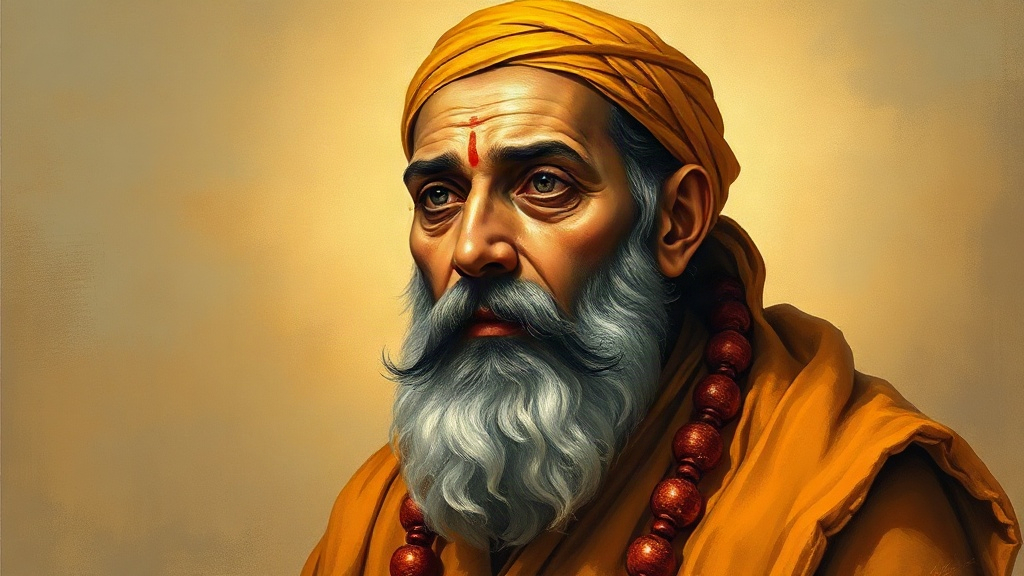
Tulsidas was born into a Brahmin family in Rajapur, in present-day Uttar Pradesh, in the 16th century.
His birth was surrounded by unusual circumstances. Tradition says that he was born after a twelve-month pregnancy and had all thirty-two teeth at birth.
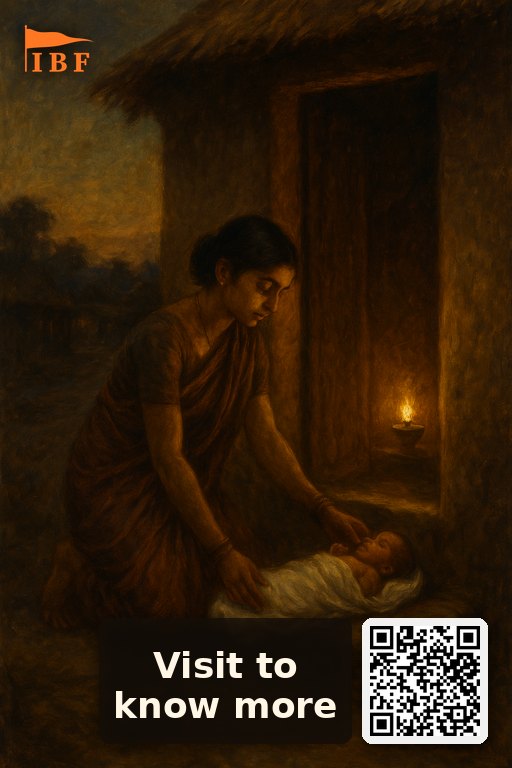
His parents were alarmed by his appearance and the circumstances of his birth. He was separated from his mother almost immediately.
The child who would one day write the Ramcharitmanas began life as one whom nobody seemed to want.
Picked Up By A Wandering Sadhu
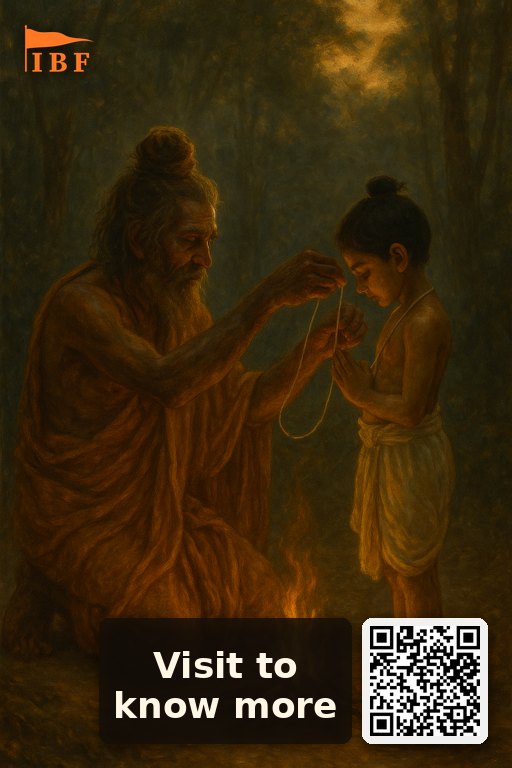
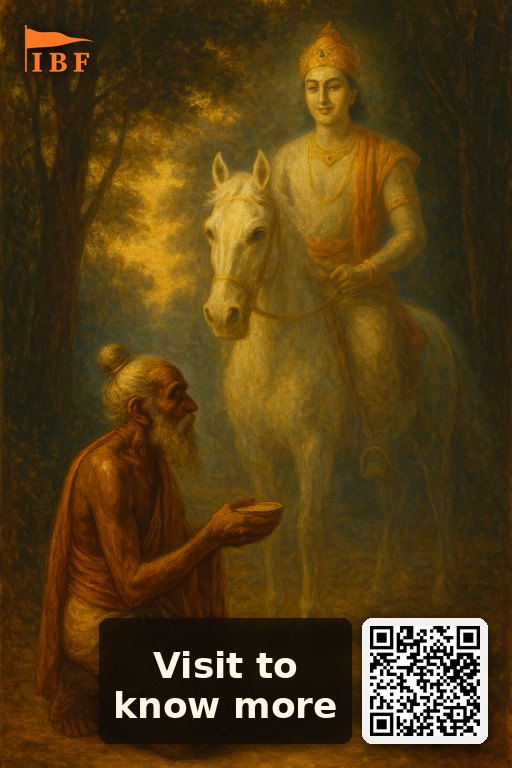
Abandoned as an infant, Tulsidas was found by a wandering ascetic.
The sadhu took the child under his care and gave him the name Rambola — “one who speaks the name of Rama.”
The boy's connection with Rama began early. He was taught the stories of the Ramayana and introduced to Sanskrit, religious learning and the traditions of the Brahmins.
The child who had been abandoned began to find his identity through Rama's name.
The Wife Who Sent Him to God
Tulsidas eventually married Ratnavali. He became deeply attached to his wife and was consumed by worldly love.
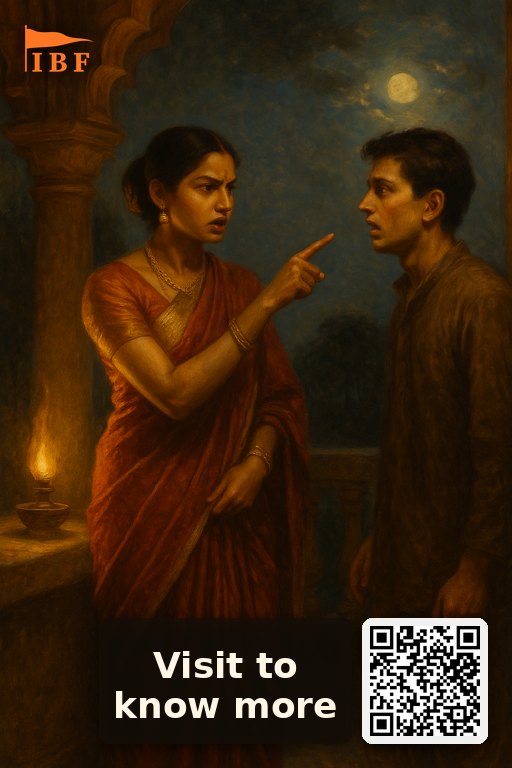
One night, unable to bear being separated from her, he crossed a river in the darkness to reach her. Ratnavali was shocked by the intensity of his attachment.
She told him that if he had even a fraction of that attachment to Rama, he would have attained God.
Her words changed his life. The attachment that had bound him to his wife became the force that turned him toward devotion to Rama.
“If you had even a fraction of that attachment to Rama,
you would have attained God.”
The words that changed Tulsidas's life forever.
Why Awadhi? Not Sanskrit?
Tulsidas chose to write about Rama in the language ordinary people could understand.
Instead of limiting his work to Sanskrit, the language of scholars and ritual specialists, he composed the Ramcharitmanas in Awadhi.
This was revolutionary.
The stories of Rama could now be heard and recited by people who had no access to Sanskrit learning. The sacred story left the scholar's classroom and entered the homes, villages and streets of North India.
The Manas
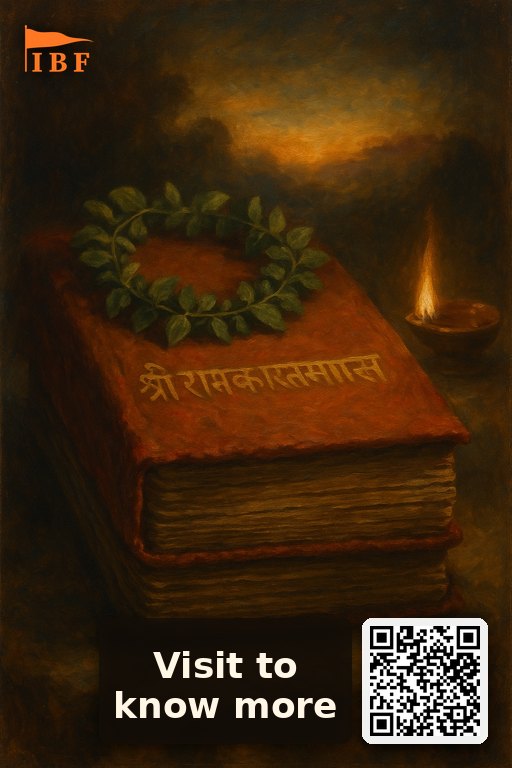
The Ramcharitmanas became Tulsidas's greatest work.
Written in Awadhi, it retells the story of Lord Rama and presents the ideals of dharma, devotion, righteousness and service.
For centuries, families have recited it. Its verses are sung in temples, homes and public gatherings. The work transformed the way generations of North Indians experienced the Ramayana.
Tulsidas did not simply write a book. He created a living devotional tradition.
Living at Tulsi Ghat
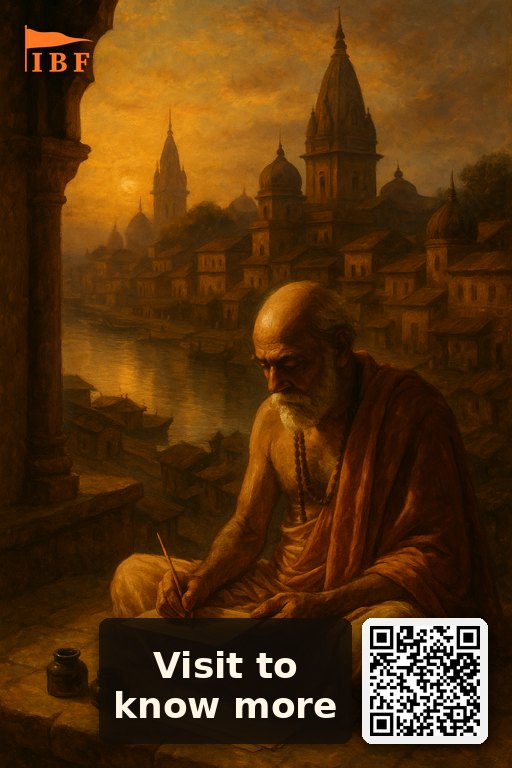
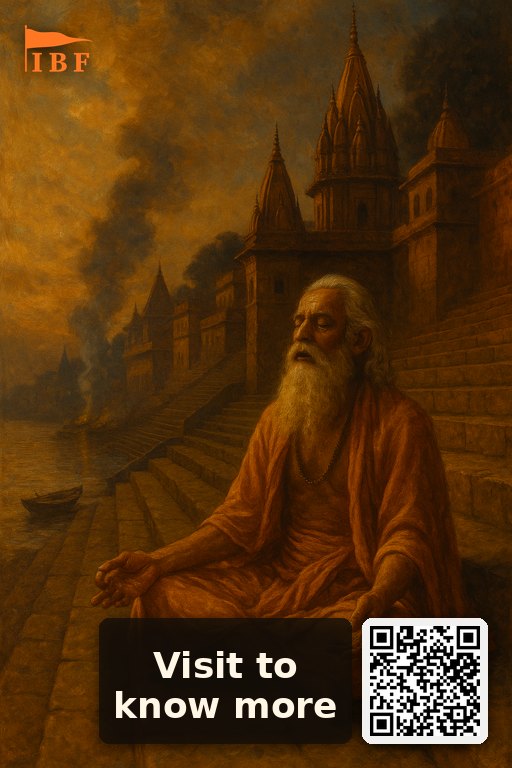
Tulsidas spent much of his later life in Kashi, the sacred city on the banks of the Ganga.
He lived near the river at what became known as Tulsi Ghat. There he continued writing, teaching and worshipping Rama.
Kashi became the centre of his spiritual life. His presence became part of the sacred landscape of the city, and his name remains connected with the ghat that still bears it.
The Hanuman Chalisa
Among Tulsidas's most beloved compositions is the Hanuman Chalisa.
Forty verses praising Hanuman, it became one of the most widely recited devotional works in North India.
Its simple language made it accessible to ordinary people. Its devotion made it timeless.
Even today, millions of people recite the Hanuman Chalisa as a daily prayer. Tulsidas's words continue to travel from one generation to another.