
Tulsidas
Brahmin poet. Abandoned at birth. Rejected by his wife. He wrote the Ramcharitmanas in Awadhi — and gave a sub-continent of non-Sanskrit speakers their Lord Ram.
| Born | 1497 CE · Rajapur, Uttar Pradesh (some traditions say 1532) |
| Died | 1623 CE · Varanasi |
| Lifespan | 126 years (traditional) |
| Lineage | Sarayuparīna Brahmin · Parashar gotra |
| Original name | Rambola Dubey |
| Magnum opus | Śrī Rāmacaritamānasa — composed 1574-1577 in Avadhi |
| Other works | Vinaya Patrika · Hanuman Chalisa · Kavitavali · Dohavali · 9 more |
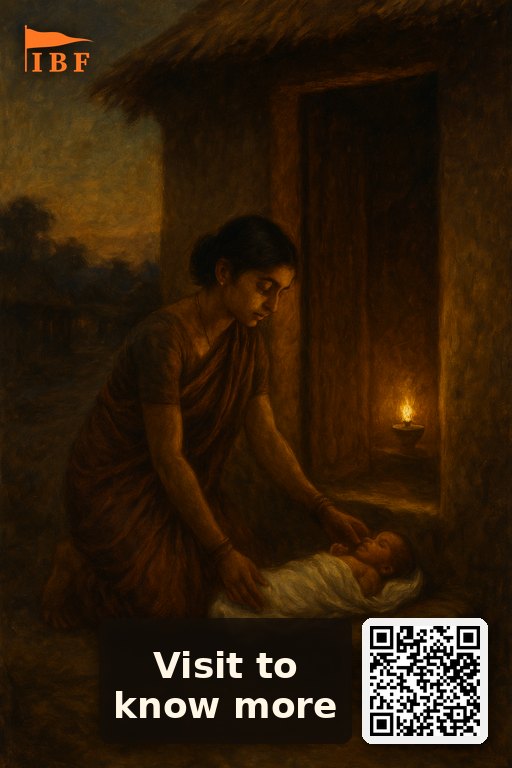
The Brahmin Child Nobody Wanted
The boy was born under a bad star — Mūla nakṣatra, which the astrologers said would consume his parents.
His Brahmin father, Atmaram Dubey, of the Parashar gotra, would not keep him. His mother Hulsi died on the second day, possibly of grief. The astrologers had been correct about her, if not yet about the father.
The infant was given away to a maidservant named Chuniya. She was poor. She raised him for four years until she also died. Then he was on the road.
He was a Brahmin child by birth. By circumstance, he was a beggar boy with a topknot and a tilak, eating what was offered, sleeping where he could.
This child's first name was Rāmabolā — "the one who only said Ram" — because the chronicles record that the first word out of his mouth as a newborn was not amma but Rām.
Picked Up by a Wandering Sadhu
Somewhere on the road between Rajapur and Sukar-khet, the boy was seen by a wandering sadhu. Narahari Das. A disciple of the Rāmānanda sampradāya — the Bhakti order that had broken Vaishnava devotion out of the Brahmin-only enclosure and made it available to anyone with a tongue.
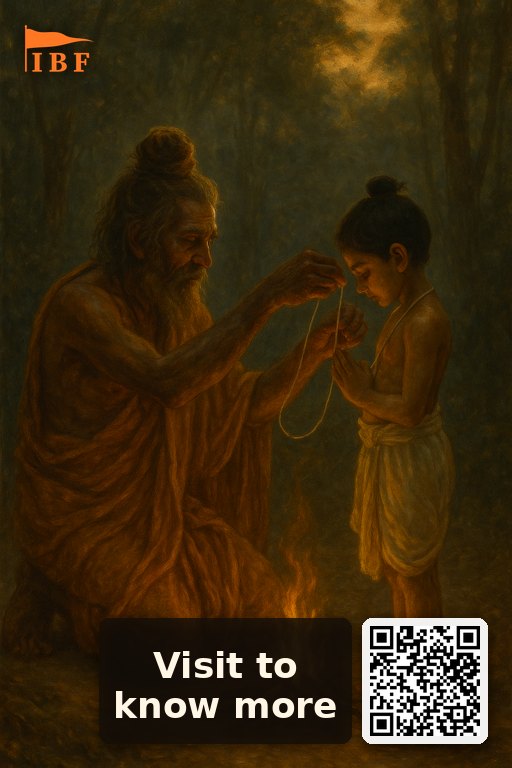
Narahari Das looked at the begging Brahmin orphan and saw what he was. He named him Tulsīdās — "slave of the Tulsi plant," the basil sacred to Vishnu. He performed the boy's upanayana — the Brahmin sacred-thread ceremony every father is supposed to perform for his son. He did it himself in a forest.
For the next several years Tulsidas was Narahari Das's disciple. He studied Sanskrit. He studied the Vedas. He studied the Vālmīki Rāmāyana in the original. He memorised it.
Then Narahari Das let him go to Kashi to complete his Brahmin education with another great teacher, Śeṣa Sanātana, with whom he spent fifteen years.
The Wife Who Sent Him to God
He married. Her name was Ratnāvalī. He loved her past all reason.
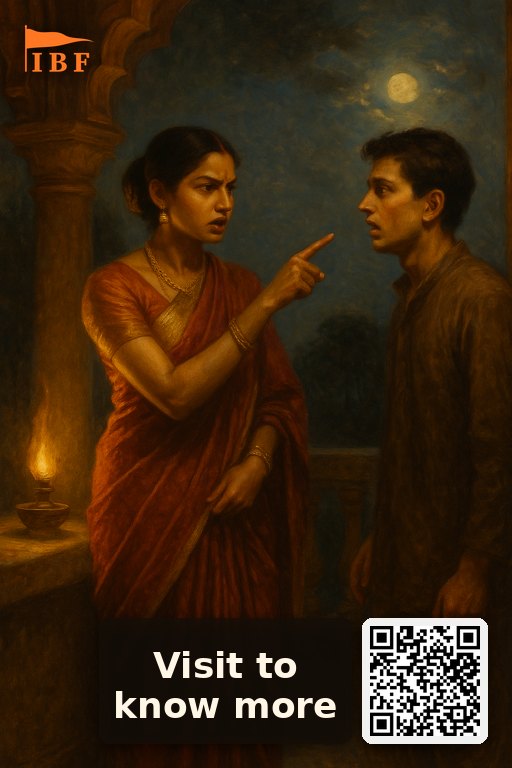
The story Brahmin Vaishnava tradition tells about her is sharp and famous. Tulsidas was visiting Ratnavali at her father's house, against custom. Embarrassed by his attachment, she said to him:
"Asthi-carma-may deha mama, tāmen aisī prīti / Tisī ardha jo Rāma se, hotī na bhava-bhīti."
"If you loved Ram even half as much as you love this body of flesh and bone, you would not have any fear of this world."
He left her house that night. He never returned to her as a husband.
He became a sannyāsi. He took to wandering. Every chronicle of Bhakti tradition treats Ratnavali as the second of his two gurus — the one who turned a Brahmin householder into the singer of Ram.
“Yathā suvīra-sevā-rata Lakṣmaṇa — Service done with the strength of a hero, as Lakshman served Ram.”
Why Avadhi, Not Sanskrit
Sanskrit was the language of the Brahmin scholar. Tulsidas knew it perfectly. He could have written the Rāmāyana again in Sanskrit and joined the long line of post-Valmiki re-tellers — every one of which was read only by the twice-born who could read Sanskrit.
He did something else.
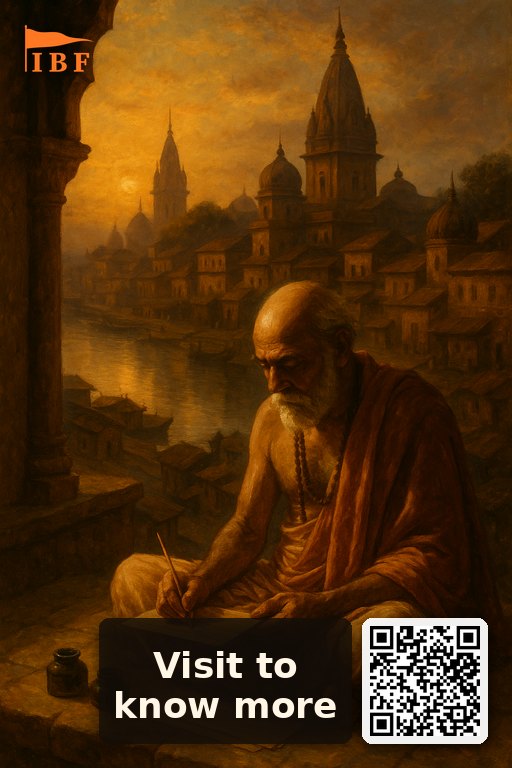
He went to Ayodhya, the city of Ram's birth, in 1574. He sat down on a verandah. He began to write in Avadhi — the spoken dialect of the eastern Hindi belt. The language his father spoke. The language a Brahmin household servant spoke. The language a farmer in Awadh spoke.
Other Brahmins protested. The Sanskrit pandits of Kashi were furious. The shudra and the woman would now read the Ramayana directly, without a Brahmin priest between them and the text.
Tulsidas, a Brahmin, said: that is exactly the point.
The Manas
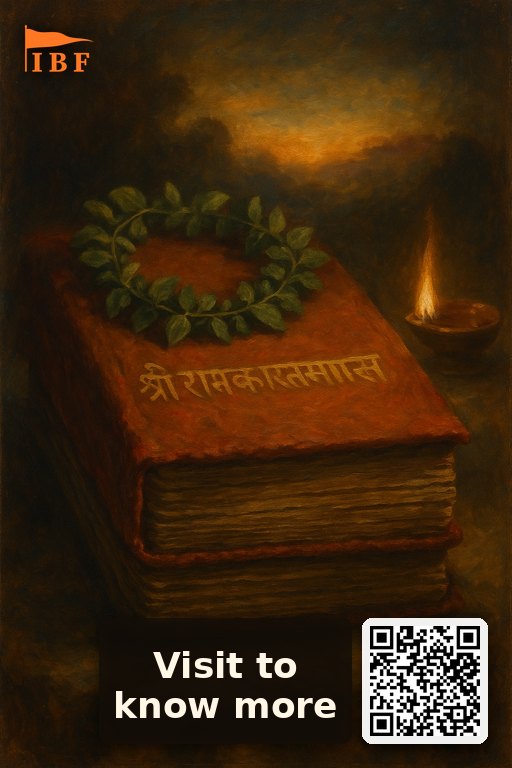
He worked for two years, seven months, twenty-six days. He finished the Śrī Rāmacaritamānasa in 1577 in Kashi.
Seven kāṇḍas. About twelve thousand five hundred couplets. The complete life of Rama — from Vishnu's incarnation to the slaying of Ravana to the final ascent — in language any Avadhi-speaker could chant.
And it did not just narrate. It devoted. Every kāṇḍa is laced with verses of pure Bhakti — the soul addressing Ram directly, the disciple addressing the guru, the servant addressing the master. The text is a continuous act of love.
Four hundred and fifty years later, the Ramcharitmanas is the single most read religious text in north India. It outsells every Indian-language book ever printed. It is recited continuously at Tulsi Ghat in Varanasi, at every Ram-temple from Delhi to Janakpur, and in the daily life of tens of millions of Hindu households.
The shudra and the woman did read it. They still do.
“Hari kī tumako kuchh khabar nahīṃ — You have no idea what God knows about you.”
Living at Tulsi Ghat
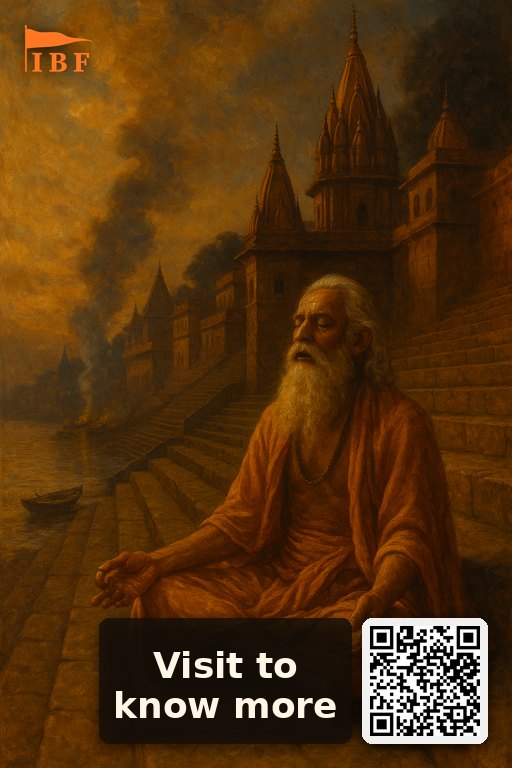
Tulsidas lived the rest of his life in Varanasi. The Brahmin Sanskrit pandits there fought him for years — the pandits of Vishvanath temple sent emissaries to demand he translate the Manas back into Sanskrit. He refused.
The story is that one night the pandits sent the manuscript to be placed at the feet of Lord Shiva inside the Vishvanath temple, with the Sanskrit Vedas placed above it, and locked the doors. In the morning the Manas had been moved to the top of the pile. On the cover, in Shiva's own ink, was written: Satyam Śivam Sundaram. Truth, auspiciousness, beauty.
The legend is unverifiable. The fact that the Manas became the central text of north Indian Vaishnavism after that is not.
Tulsidas lived simply at the ghat that still bears his name. He built no matha. He took no disciples by force. He sang.
The Darshan
He had only one ambition for himself. He wanted to see Ram.
Hanuman, according to tradition, appeared to him repeatedly in disguise. Tulsidas began to recognise him. The two of them met. Hanuman blessed him and told him where Ram could be glimpsed.
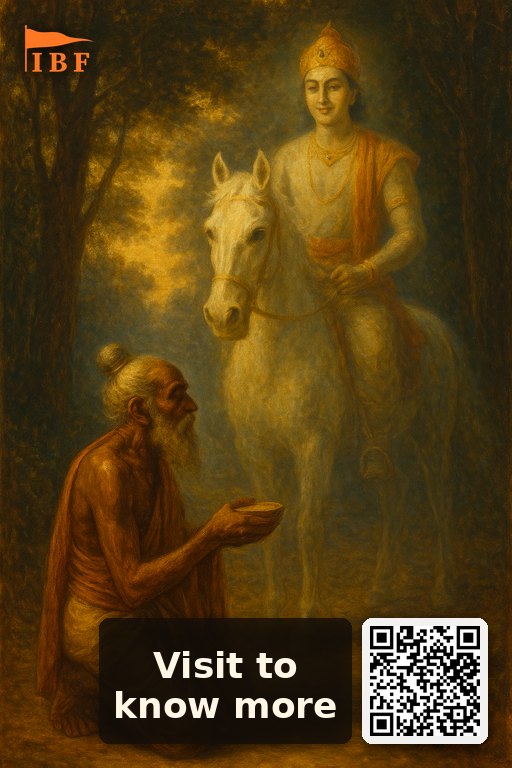
The chronicles say Tulsidas saw Ram once, as a boy on a horse, in Chitrakoot. He prepared a tilak of sandal-paste to mark the boy's forehead, and could not do it. He stood paralysed. Ram smiled and disappeared.
After that — and only after that — Tulsidas wrote the Hanuman Chālīsā. Forty couplets to the monkey-god who had brought him the darshan.
The Hanuman Chālīsā is, today, perhaps the most chanted Hindu prayer in the world. Every car has it on a cassette. Every Hanuman temple recites it morning and evening. A truck driver in Bihar knows it by heart, and so does a CEO in Mumbai. A Brahmin poet wrote it. Everyone reads it.
The Hanuman Chalisa
He died at Asi Ghat, Varanasi, in 1623. He was an old man — the traditional account says 126.
The world he left behind was different from the one he had been born into. The Ramayana now belonged to everyone. The Brahmin priest was no longer a required intermediary. A village grandmother could chant a couplet to her grandson at bedtime. A widow could carry the text in her dowry. A field-worker could sing it during harvest.
This is what the Bhakti movement did, and Tulsidas was its most consequential Brahmin contributor — a man who had every reason to keep the tradition narrow, and instead gave it away.
He had been thrown out at birth. He gave Ram to a hundred million homes.
Carry the Story
The Brahmin Federation tells these stories so they are not lost. Share this one. Tell it forward.
He was a Brahmin baby abandoned at birth under a bad star. His wife sent him to God by shaming him for loving her too much. He wrote the Ramcharitmanas in the dialect of farmers — and gave a hundred million Hindus their Lord Ram.
https://brahminfederation.org/legacies/tulsidas
Tulsidas was a Brahmin orphan raised by a maidservant. His wife told him: if you loved Ram half as much as you love this body, you would not fear this world. He became a sannyasi and wrote the Ramcharitmanas in Awadhi — the spoken dialect, not Sanskrit — so that farmers, women, and shudras could read the Ramayana without a Brahmin priest standing between them and the text.
https://brahminfederation.org/legacies/tulsidas
Tulsidas — Brahmin orphan, sannyasi, poet of the Ramcharitmanas. He gave the Ramayana to everyone in their own language. 1497-1623.
https://brahminfederation.org/legacies/tulsidas
Tulsidas. Born 1497 to Sarayuparina Brahmins. Abandoned under a bad star. Wife sent him to God. He wrote the Ramcharitmanas (1574-77) in Awadhi — the spoken language — so anyone could read the Ramayana, not just Sanskrit-knowing Brahmins. Also wrote the Hanuman Chalisa. #Tulsidas #Ramcharitmanas #BrahminLegacy #BhaktiMovement #IBF
https://brahminfederation.org/legacies/tulsidas
In the 16th century a Brahmin orphan named Tulsidas chose to write the Ramayana in Awadhi — the spoken dialect — instead of Sanskrit. The Brahmin pandits of Varanasi opposed him. He published anyway. Four hundred years later, his Ramcharitmanas is the most-read religious text in north India and the Hanuman Chalisa he authored is the most-chanted Hindu prayer in the world. A Brahmin who chose to give the tradition away.
https://brahminfederation.org/legacies/tulsidas
Or copy the link: https://brahminfederation.org/legacies/tulsidas
Know a Brahmin legacy worth preserving?
The Federation is building this archive one story at a time. Send us a name, a tradition, a forgotten manuscript. If it deserves to be told, we'll tell it.