
Pandit Madan Mohan Malaviya
Brahmin lawyer. Newspaper editor. Four-time Congress president. Founder of Banaras Hindu University. A reformer who refused to let modernity erase the parampara.
| Born | 25 December 1861 · Allahabad |
| Died | 12 November 1946 · Varanasi |
| Lineage | Gauda Brahmin |
| Career | Lawyer · journalist · educationist · parliamentarian |
| Founded | Banaras Hindu University (BHU) · 1916 |
| Edited | The Hindustan Times · Abhyudaya · Leader |
| Congress President | Four times — 1909, 1918, 1932, 1933 |
| National motto | Coined Satyameva Jayate — adopted as India's national motto in 1947 |
Born to the Brahmin Reform Generation
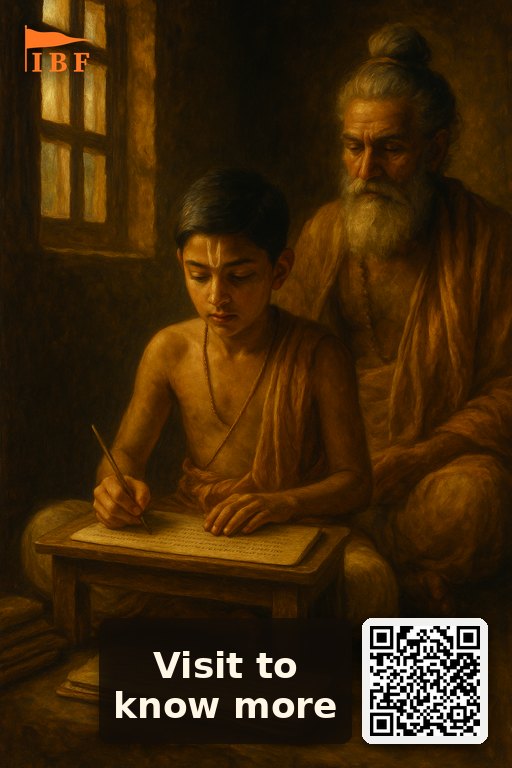
He was born on Christmas Day, 1861, in Allahabad, in a Gauda Brahmin family of modest means but immense scholarly seriousness. His father, Pandit Brij Nath, was a Sanskrit scholar who recited the Śrīmad Bhāgavatam publicly for a living.
The boy was the fifth of seven children. He learned the four Vedas in the traditional gurukula manner by the time he was twelve. He also learned English in the new colonial schools the British were opening.
Two traditions, both fully absorbed. This combination is what made him.
The Brahmin reform generation he was born into — Dayananda Saraswati had just founded the Arya Samaj, Vivekananda was a boy himself in Bengal — was wrestling with one question: How does a Brahmin tradition survive a modern colonial state, and what does it owe that state in return? Malaviya would spend his life answering it.
The Lawyer Who Saved the Chauri Chaura Men
He took his law degree from Allahabad University and joined the bar in 1891. He was meticulous, indefatigable, and morally absolute.
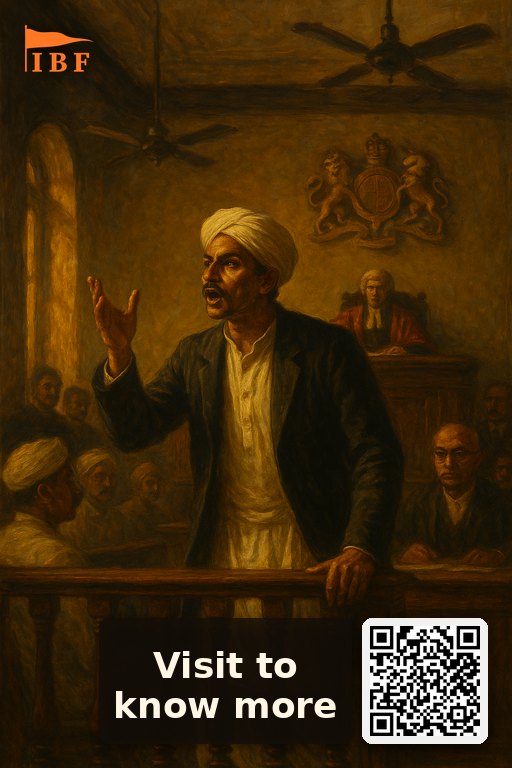
His most famous case came in 1922. Twenty-two policemen had been killed by an enraged crowd at Chauri Chaura in Uttar Pradesh, in the early days of the non-cooperation movement. The British colonial court convicted 172 villagers and sentenced them to hang.
Malaviya, a Brahmin lawyer at the height of his career, took the appeal pro bono. He worked for months. He argued every individual case. He saved 151 of the 172 from the gallows.
He never charged a fee in any case involving the freedom movement. The Brahmin gave away his most lucrative skill to the political project he had aligned himself with.
The Newspapers
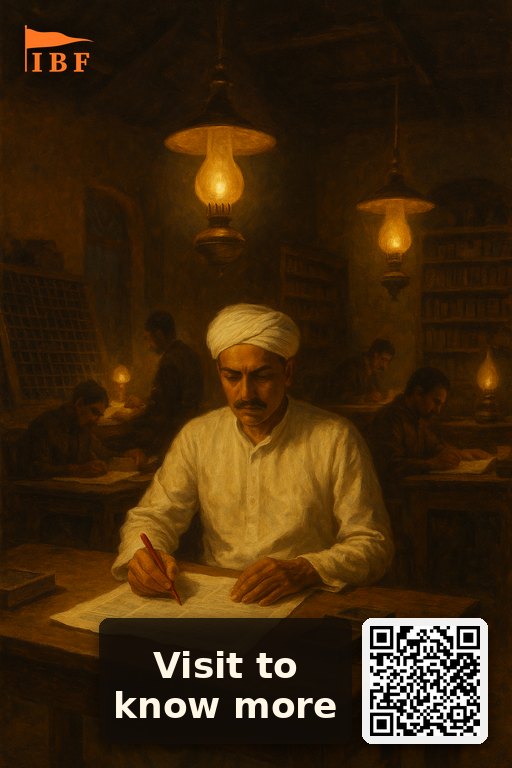
He founded or edited four major newspapers across his life. Hindustan (Hindi). Abhyudaya (Hindi). Leader (English, Allahabad). Hindustan Times (English, Delhi — he was its founding chairman in 1924).
Through them he ran a thirty-year campaign on Hindu cultural and educational reform that operated entirely inside the law, used only courteous language, and was nonetheless among the most effective journalistic projects in colonial India.
The British learned to fear his style. They could not detain him for sedition — his language was always temperate. They could not refute him on facts — his preparation was exhaustive. They could only argue, and they kept losing.
The University on the Ganga
His magnum opus was an institution.
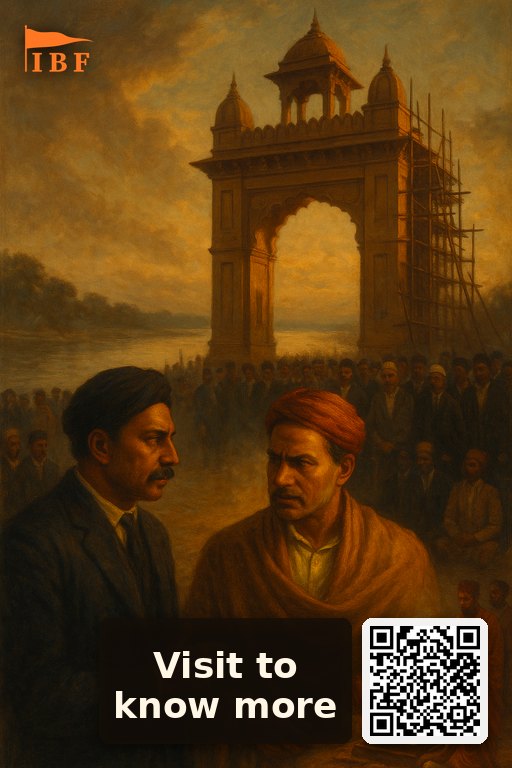
In 1904 he began to dream of a modern Hindu university — Sanskrit, science, engineering, medicine, agriculture, all under one roof, on the bank of the Ganga at Kashi. The traditional Brahmin tradition and the modern technical disciplines, taught side by side, to students of every Hindu caste and to non-Hindus who wished to join.
He raised money for it for twelve years. He walked from city to city. He approached princes, businessmen, peasants. He took a single rupee donation as eagerly as a lakh. He took none from the British government in any form that came with conditions.
Banaras Hindu University was inaugurated on 4 February 1916. Mahatma Gandhi spoke at the opening — his first major Indian public speech after returning from South Africa. The university had 1,300 acres, a faculty of Brahmin Sanskritists and Cambridge-trained scientists side by side, and a charter that prohibited discrimination on caste or religion in admissions.
BHU is still there. It has 40,000 students. It is the largest residential university in Asia.
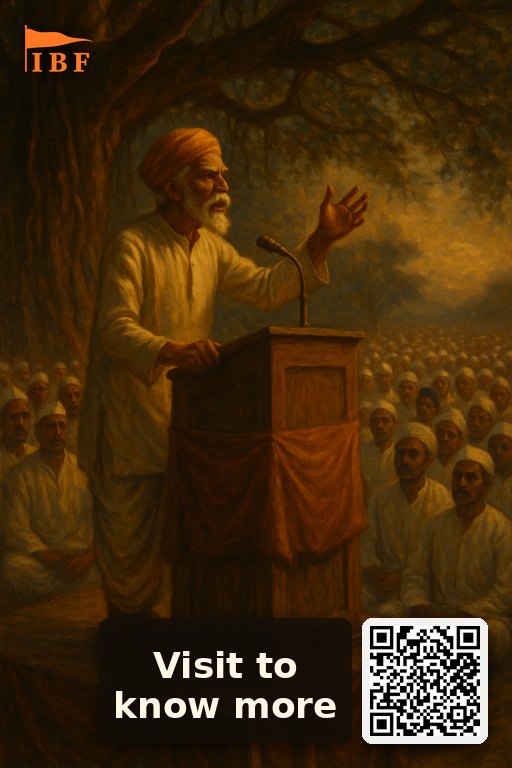
“If the Brahmin tradition is to live in a modern nation, it must build modern institutions — and let everyone walk into them.”
Congress President — Four Times
He was elected president of the Indian National Congress four times — in 1909, 1918, 1932, and 1933. No other person was elected more than three times.
He was, throughout, a Hindu traditionalist within the Congress — a Brahmin who refused to apologise for being one but who fought passionately for Dalit access to temples, for women's education, for inter-caste cooperation, for Hindu-Muslim unity within a federal Indian nation.
He was Gandhi's elder, Nehru's elder, and the one Brahmin elder both of them deferred to even when they disagreed with him.
Independence Without Being a Sycophant
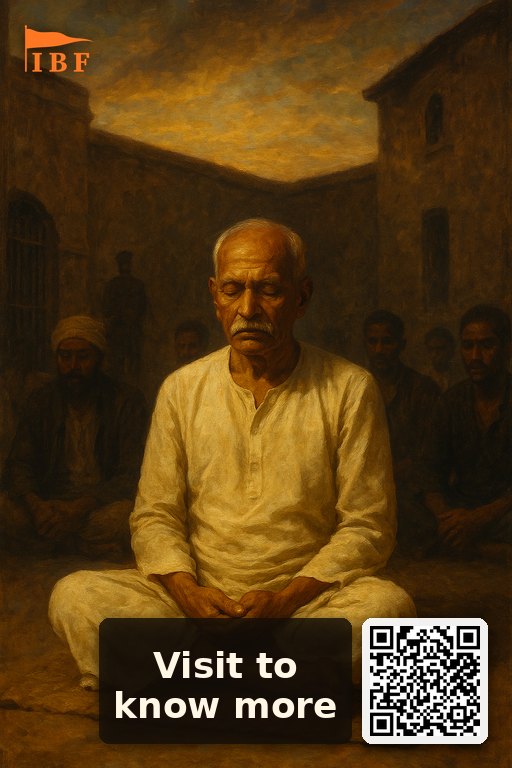
In 1932 he refused to sign the Communal Award — which would have created separate electorates for Dalits and effectively split Hindu political representation. He fasted alongside Gandhi at Yerwada Jail. The Award was withdrawn.
He resigned from the Congress in 1934, opposing its acceptance of separate electorates. He founded the Congress Nationalist Party. He fought elections under it.
He was wrong about some things. He was right that a Brahmin in public life was permitted to disagree with Gandhi without becoming his enemy — and he demonstrated, by his manners, that the disagreement could be done with grace.
The Brahmin tradition of niti includes knowing when to step out of a hall.
Satyameva Jayate
He died on 12 November 1946, in Varanasi. He was eighty-four. He did not live to see independence — it came nine months later.
The motto India chose at independence was the one he had spent his life saying:
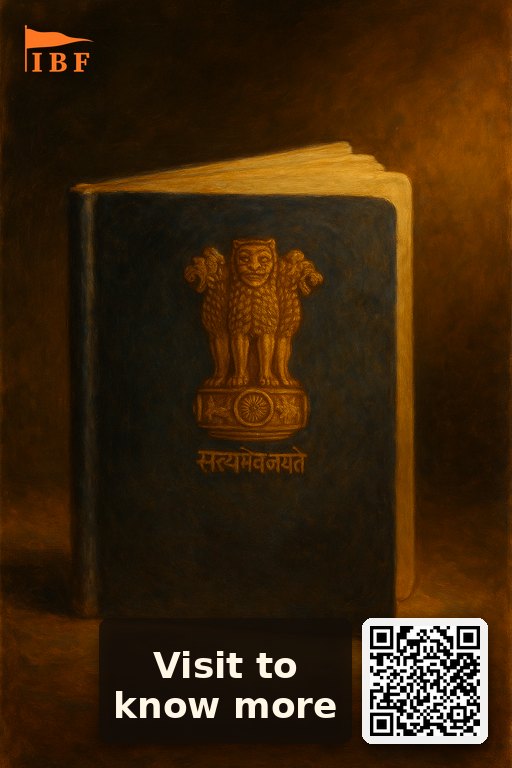
सत्यमेव जयते — Satyameva Jayate. Truth alone triumphs.
It is from the Muṇḍaka Upaniṣad. Malaviya had used it for forty years as the slogan of every campaign he ran. In 1947 it became the motto under the Ashoka emblem on every Indian passport, every Indian government building, every Indian rupee note.
Every Indian who has ever shown a passport at any border in the world has carried Madan Mohan Malaviya's slogan under their photograph.
“We have to act so that the world believes us. We have to be so that the world's belief is justified.”
A Founder's Statue Outside the Gate
He was awarded the Bharat Ratna — India's highest civilian honour — in 2014, sixty-eight years after his death.
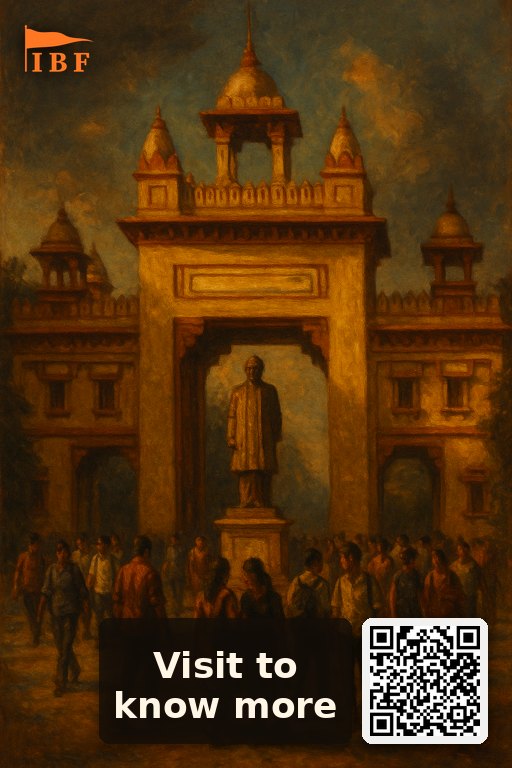
His statue stands outside the main gate of BHU at Varanasi. Forty thousand students pass it every day on their way to class. Many of them are Dalits whose grandparents were not allowed into Hindu temples in his lifetime. Many of them are Muslims whose grandparents fought against the founding of a "Hindu" university. Many of them are Brahmins. None of them are turned away.
That, in the end, was his life's argument: a Brahmin can build an institution that serves people who are not Brahmins. The tradition is broad enough to do that. The dharma demands it.
He did the demanding. The institution did the rest.
Carry the Story
The Brahmin Federation tells these stories so they are not lost. Share this one. Tell it forward.
He was a Brahmin lawyer who refused fees in freedom-movement cases. He founded Banaras Hindu University. He coined Satyameva Jayate. Every Indian passport carries the slogan he made the country's motto. Pandit Madan Mohan Malaviya. 1861-1946.
https://brahminfederation.org/legacies/madan-mohan-malaviya
Pandit Madan Mohan Malaviya was a Brahmin reformer of the rarest kind — devoted to the tradition, but determined to build modern institutions that would serve everyone. He founded Banaras Hindu University in 1916 on the Ganga. He was elected Congress president four times. He coined the slogan Satyameva Jayate, which became independent India's national motto in 1947.
https://brahminfederation.org/legacies/madan-mohan-malaviya
Pandit Madan Mohan Malaviya — Brahmin founder of BHU, four-time Congress president, who coined Satyameva Jayate.
https://brahminfederation.org/legacies/madan-mohan-malaviya
Pandit Madan Mohan Malaviya. Born 1861 to a Gauda Brahmin family in Allahabad. Lawyer, journalist, four-time Congress president. Founded Banaras Hindu University in 1916 (40,000 students today). Coined Satyameva Jayate — India's national motto since 1947. Bharat Ratna 2014. #Malaviya #BHU #BrahminLegacy #SatyamevaJayate #IBF
https://brahminfederation.org/legacies/madan-mohan-malaviya
Pandit Madan Mohan Malaviya was a Brahmin reformer who refused to choose between his tradition and a modern nation. He raised the funds for Banaras Hindu University for twelve years on foot — accepting one-rupee donations and refusing British grants with conditions — and inaugurated it in 1916 with Gandhi as the keynote speaker. He coined the slogan Satyameva Jayate, which has appeared on every Indian passport since 1947. A model of how the Brahmin order can build institutions that serve everyone.
https://brahminfederation.org/legacies/madan-mohan-malaviya
Or copy the link: https://brahminfederation.org/legacies/madan-mohan-malaviya
Know a Brahmin legacy worth preserving?
The Federation is building this archive one story at a time. Send us a name, a tradition, a forgotten manuscript. If it deserves to be told, we'll tell it.