
Kalidasa
Brahmin poet of the Gupta court. The greatest writer in the Sanskrit language. Three plays. Two epics. The lyric poem so perfect that Goethe knelt and kissed the book.
| Era | 4th-5th century CE · Gupta golden age |
| Patron | Chandragupta II Vikramaditya — at Ujjain |
| Lineage | Brahmin |
| Genre | Sanskrit drama (nāṭaka) · epic (mahākāvya) · lyric |
| Works | Abhijñāna-Śākuntalam · Mālavikāgnimitra · Vikramorvaśīyam · Raghuvaṃśa · Kumārasambhava · Ṛtusaṃhāra · Meghadūta |
| Reputation | Called Kavi-kula-guru — the teacher of every Brahmin poet who would come after him |
The Story Tradition Tells
The historical Kalidasa is almost invisible. We have no inscription, no contemporary mention, no birth date.
What we have is a body of work so extraordinary that Sanskrit literary tradition has had to invent a biography to explain it.
The story it tells: he was born a Brahmin in northern India, perhaps in the Vidisha region. He was beautiful, kind-hearted, and, in his youth, an absolute fool. He could not read.
A Brahmin scholar's daughter named Vidyottamā had vowed to marry only the man who could defeat her in debate. Her father's enemies, humiliated by losing to her, found Kalidasa grazing buffaloes in a field and tutored him into appearing to be a great pandit. He defeated her by pretending. She married him and discovered the truth.
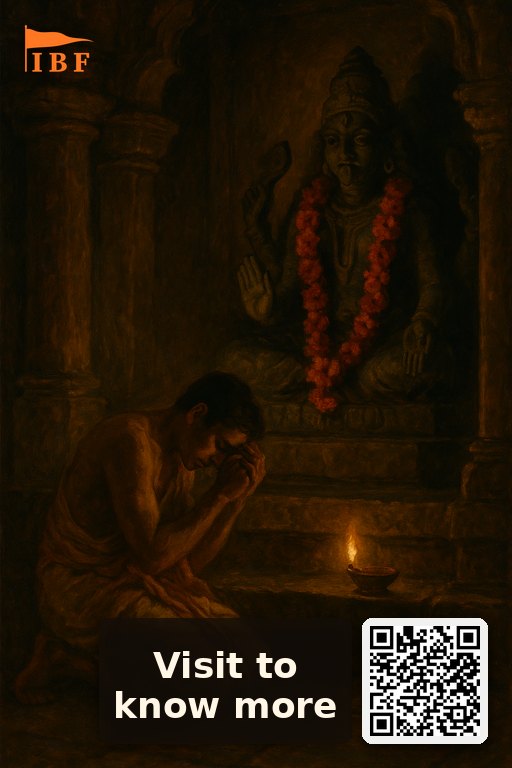
She threw him out. He walked into a temple of Kālī in despair and tried to take his own life on her shrine. The Goddess intervened. He woke with the gift of speech and the name Kālidāsa — "servant of Kālī."
The legend is unreliable. The fact that every Brahmin poet's tradition tells the same legend is not. This is the figure they all claim as the source.
The Ujjain Court
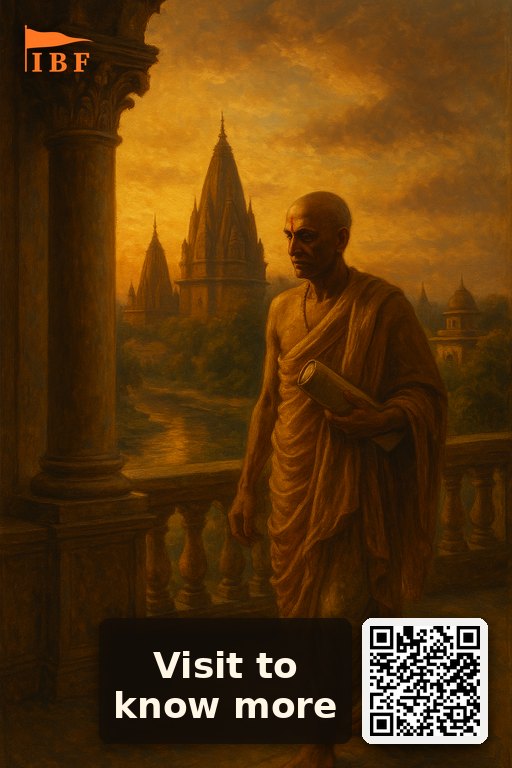
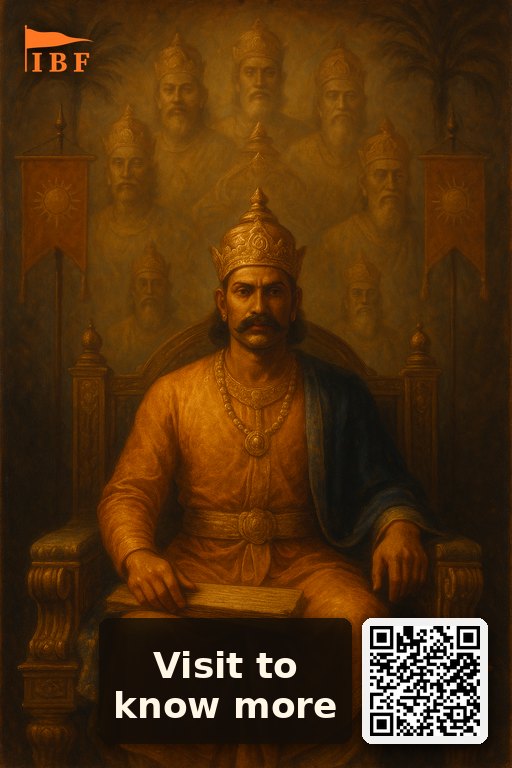
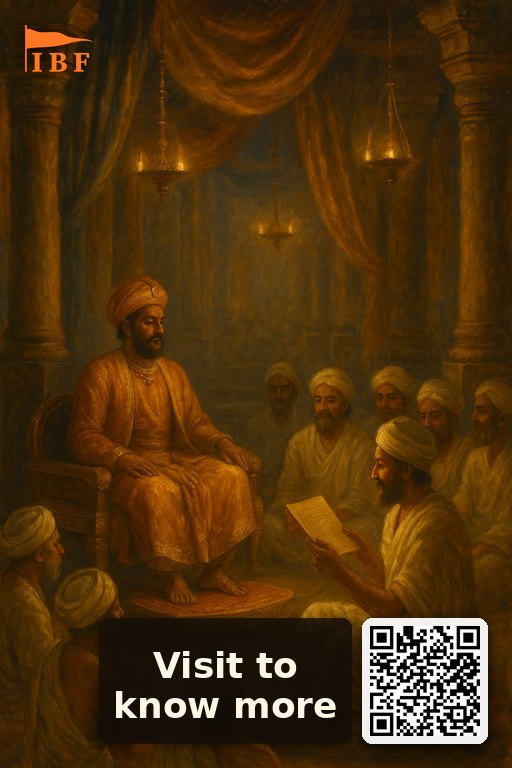
He served at the court of Chandragupta II Vikramaditya at Ujjain — the capital of the Gupta empire at its zenith.
Ujjain in the 4th-5th century was the literary capital of the Sanskrit world. Tradition says nine "jewels" — the Navaratnas — served Vikramaditya's court. Kalidasa was the brightest of them.
He wrote in three forms: drama (nāṭaka), epic (mahākāvya), and lyric (khaṇḍa-kāvya). He produced absolute masterpieces in all three.
Sanskrit had been a sacred ritual language for a thousand years before him. After him, it was also unambiguously a literary language. The two registers — śruti and sahitya — co-existed because of his work.
Shakuntala
The play that defines him is Abhijñāna-Śākuntalam — "The Recognition of Shakuntala."
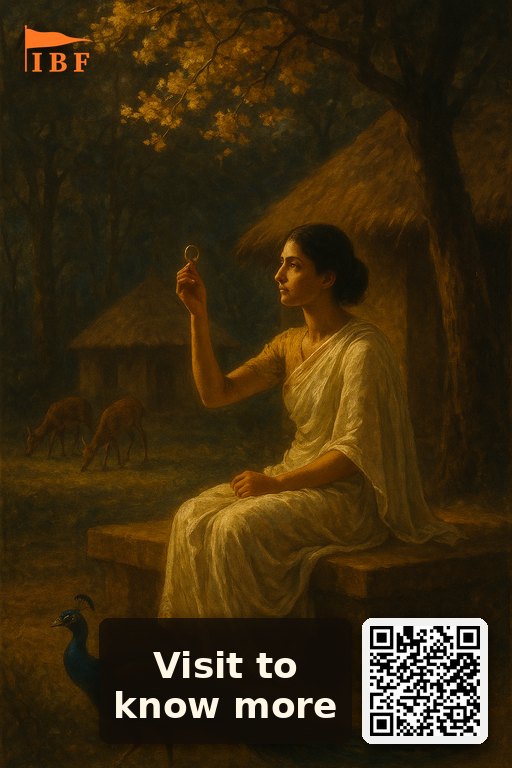
A king on a hunt comes upon a forest ashram. There he meets Śakuntalā, the foster-daughter of the sage Kaṇva. They fall in love. They marry in the gandharva fashion — without witnesses, only each other's consent. He leaves a ring and rides back to his kingdom to send for her formally.
A passing sage, slighted, curses her: the king will not remember her unless she shows him the ring. She loses the ring crossing a river. She arrives at the palace pregnant; her husband does not know her.
The fisherman who finds the ring eventually sends it. The curse lifts. The recognition is total. Mother, father, son — restored.
It is the first Sanskrit play to depict ordinary married love as worthy of cosmic seriousness. Every aesthetic principle of rasa-theory — the nine emotional registers Brahmin literary theory had been mapping for centuries — is deployed at full force.
It is also the play that, when translated into English by Sir William Jones in 1789, single-handedly created the field of Indology in Europe.
“Yat tat priyaṃ vatsa tad eva ramyam — Whatever is dear is also beautiful, dear child.”
The Cloud-Messenger
The lyric that defines him is the Meghadūta — "The Cloud-Messenger."
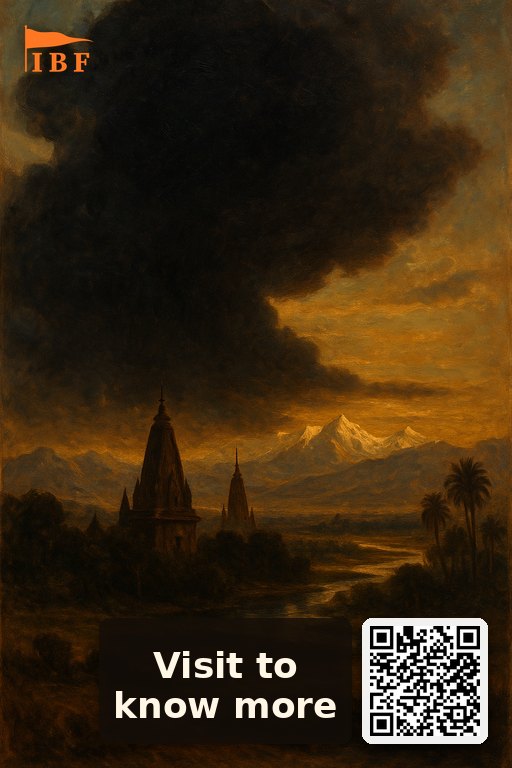
A demi-god (yakṣa), exiled by his lord for failing in his duty, has been separated from his wife for an entire monsoon. On the first day of the rainy season he sees a cloud and asks it to carry a message of love and longing to his wife in the Himalayan city of Alakā.
The poem is 111 verses long. Every verse is in the slow mandākrāntā meter — the rhythm of a cloud moving north over the plains. The yakṣa describes to the cloud, in geographic order, every river, mountain, forest and city it will pass over. By the time the cloud reaches Alakā, the reader has flown the entire length of north India and back.
It is, by consensus, the most perfect lyric poem in the Sanskrit language. Possibly in any language.
“Kaścit kāntā-viraha-guruṇā svādhikārāt pramattaḥ — A certain yakṣa, banished by his lord's neglected duty.”
The Raghu Dynasty
The epic that defines him is the Raghuvaṃśa — "The Dynasty of Raghu."
Nineteen cantos. The full lineage of the solar Brahmin-Kshatriya dynasty from which Rama descends. Dilīpa, Raghu, Aja, Daśaratha, Rāma, Kuśa, Atithi — twenty-eight kings, each a distinct study in dharma and its failures.
It is the model for every Sanskrit dynastic poem that came after. It is also where Kalidasa's metrical command is at its most musical — different cantos in different meters, each suited to the temperament of the king it describes.
It is in the Raghuvaṃśa that Kalidasa lays down what would become the Brahmin literary ideal of kingship: raghūṇām anvavāya — to be worthy of one's lineage.
Six Seasons
He also wrote the Ṛtusaṃhāra — "The Gathering of the Six Seasons." Six cantos, one per Indian season: grīṣma (summer), prāvṛṣ (monsoon), śarad (autumn), hemanta (cold), śiśira (winter), vasanta (spring).
It is short, sensual, almost a young man's poem. The seasons are described not abstractly but through the bodies and moods of lovers in them. The sweat of summer, the lightning of monsoon, the fragrance of spring.
If the Meghadūta is geography, the Ṛtusaṃhāra is climate. Together they map all of north Indian feeling onto Sanskrit poetic form.
What Goethe Did
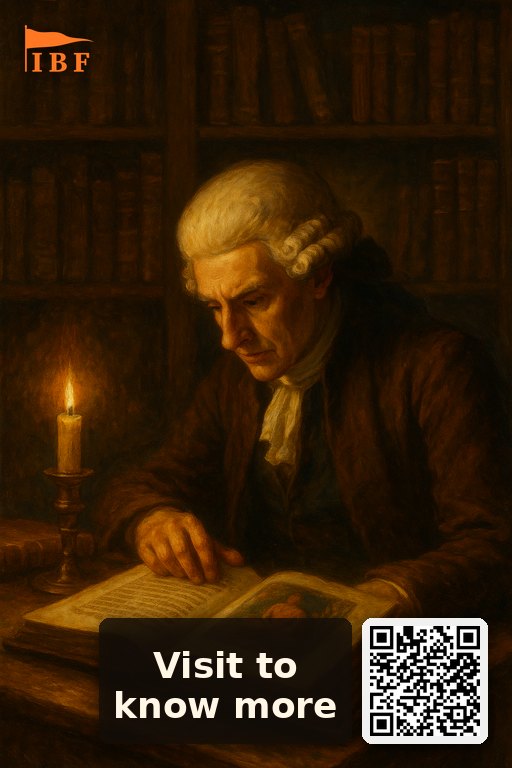
By the 18th century, news of Sanskrit literature had reached Europe. In 1789, Sir William Jones — a British judge in Calcutta who had taught himself Sanskrit from Brahmin pandits — translated Abhijñāna-Śākuntalam into English.
The book reached Germany. Johann Wolfgang von Goethe — the greatest poet of the European language at that moment — read it.
He wrote four lines about it that are now famous:
"Wouldst thou the young year's blossoms and the fruits of its decline /
And all by which the soul is charmed, enraptured, feasted, fed? /
Wouldst thou the heavens and earth themselves in one sole name combine? /
I name thee, O Sakuntala! and all at once is said."
Goethe modelled the prologue of his Faust on Kalidasa's prologue structure. He told friends he wished he could write like Kalidasa. The greatest European poet of the early modern era thought a 5th-century Brahmin poet was untouchably above him.
Why He Still Reads
Kalidasa is studied in every university in the world that has a Sanskrit department. He is set on the syllabus of every Indian school that offers Sanskrit beyond grammar. The Raghuvaṃśa is read in temples. The Meghadūta has been translated into more than fifty languages.
He has no monument. We do not know exactly where he was born, where he worked, or where he died.
What we have is the work — seven books in Sanskrit, by a Brahmin poet of the Gupta court — that for one thousand five hundred years has set the standard of what a beautiful sentence can do.
If you have ever read a love poem and thought "that's perfect," you owe the criterion to him.
Carry the Story
The Brahmin Federation tells these stories so they are not lost. Share this one. Tell it forward.
He could not read until the Goddess Kali touched him. He wrote three plays, three epics, and a 111-verse lyric that Goethe knelt and kissed. Kalidasa. The Brahmin who made Sanskrit sing.
https://brahminfederation.org/legacies/kalidasa
Kalidasa lived at the Ujjain court of the Gupta emperor Chandragupta II in the 4th-5th century CE. He wrote Abhijnana-Shakuntalam, the Meghaduta and the Raghuvamsha — three of the highest peaks in any literary language. When his Shakuntala reached Goethe in 1791, Goethe wrote that one name — Sakuntala — said everything that any poem could say.
https://brahminfederation.org/legacies/kalidasa
Kalidasa — Brahmin poet of Ujjain, 4th-5th century CE. Wrote the Sanskrit masterpieces. Goethe read him in awe.
https://brahminfederation.org/legacies/kalidasa
Kalidasa. Brahmin court poet of Ujjain, Gupta golden age. Author of: Abhijnana-Shakuntalam · Meghaduta · Raghuvamsha · Kumarasambhava · Ritusamhara · two more plays. Goethe modelled the prologue of Faust on his structure. The standard of perfect Sanskrit. #Kalidasa #SanskritLiterature #BrahminLegacy #IBF
https://brahminfederation.org/legacies/kalidasa
Sanskrit had been a ritual language for a thousand years before Kalidasa. He turned it, additionally, into the most refined literary language the subcontinent had produced. Seven works survive — three plays, two epics, two lyrics. Sir William Jones translated Shakuntala in 1789 and single-handedly created European Indology with that one book. Goethe modelled the prologue of Faust on it. A 5th-century Brahmin poet from the Gupta court still sets the standard of what a beautiful sentence can do.
https://brahminfederation.org/legacies/kalidasa
Or copy the link: https://brahminfederation.org/legacies/kalidasa
Know a Brahmin legacy worth preserving?
The Federation is building this archive one story at a time. Send us a name, a tradition, a forgotten manuscript. If it deserves to be told, we'll tell it.