
Chanakya
Brahmin teacher. Political philosopher. Kingmaker. He took a runaway boy of low caste and put him on the throne of an empire that reached from Persia to Bengal.
| Born | c. 375 BCE · Pataliputra or Takshashila (debated) |
| Died | c. 283 BCE |
| Lineage | Brahmin · gotra Kauṭilya (per the Arthaśāstra colophon) |
| Names | Chāṇakya · Kauṭilya · Viṣṇugupta |
| Position | Chief minister to Chandragupta Maurya |
| Magnum opus | Arthaśāstra — 15 books, 6,000 sūtras |
| Founded | The Mauryan Empire (321–185 BCE) — the largest political unit in Indian history before the Mughals |
The Brahmin in the Court
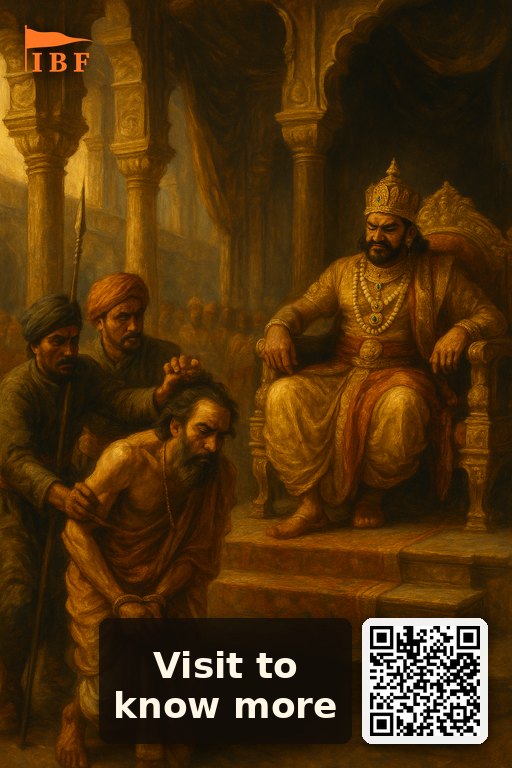
In the late 4th century BCE, a Brahmin scholar appeared at the court of King Dhana Nanda in Pataliputra. He was poor. He was dark-skinned, lean, sharp-featured. He had walked from Takshashila — the great university in the north-west, where he had studied and then taught for years.
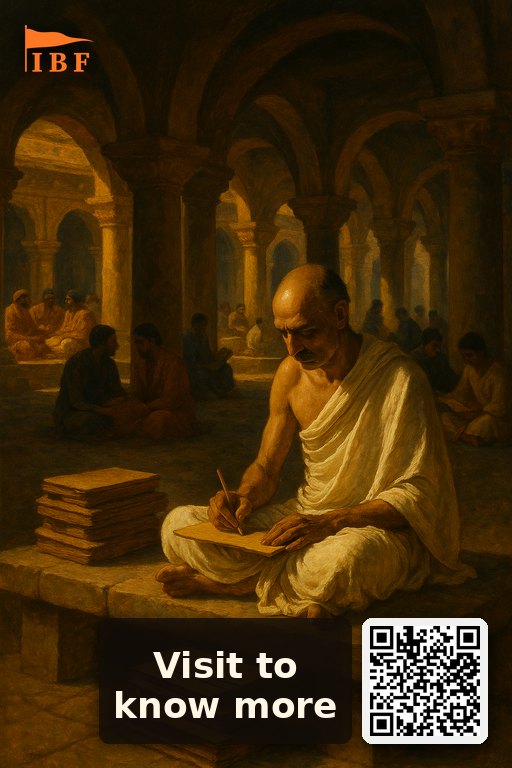
His name was Chāṇakya. He was a master of all six classical Brahmin sciences: the Vedas, niti (statecraft), arthaśāstra (economics), dhanurveda (weapons), nyāya (logic), and the practical sciences of agriculture and trade.
The Nanda court was the wealthiest in India. Dhana Nanda's army numbered 200,000 infantry and 6,000 elephants. He sat on a throne of gold and despised Brahmins.
Chanakya had come to ask for a chair at the daily Brahmin assembly — and the food offering due to any wandering scholar in a Hindu kingdom.
The Humiliation
Dhana Nanda looked at him. He had Chanakya seized by the topknot — the sacred lock of hair that no Brahmin ever lets a stranger touch — and dragged from the hall.
His śikhā was untied. He was thrown into the street.
For a Brahmin, this was not just personal disgrace. It was a desecration of the sacrament every twice-born man wears on his body. It was a king's insult to the entire Brahmin order.
Chanakya rose from the dirt outside the palace gate. He retied his śikhā with deliberation. And he made the vow that every Sanskrit chronicle records in the same words:
"I will not retie this knot again until the Nanda dynasty is uprooted from this earth."
“Yathā hyekena cakreṇa na rathasya gatir bhavet — As a chariot cannot move on a single wheel, so dharma alone cannot rule. Rāja-daṇḍa must walk beside it.”
The Vow
He went back to Takshashila. The northern university lay in modern Pakistan, in a country at that moment occupied by the receding Greeks — Alexander had passed through and died, and his successors were now fighting over the Punjab.
Chanakya did two things at Takshashila.
He began composing the Arthaśāstra — the science of statecraft, economics, and intelligence work. Not a book of advice to kings. A book of operations. How to recruit spies. How to assess crop yields. How to detect a poisoned drink. How to identify which neighbouring king is about to break a treaty. How to keep an empire from rotting at its centre.
And he began looking for a king. Not a Nanda — a new dynasty entirely.
The Boy in the Forest
He found him playing in the forest outside a Brahmin village.
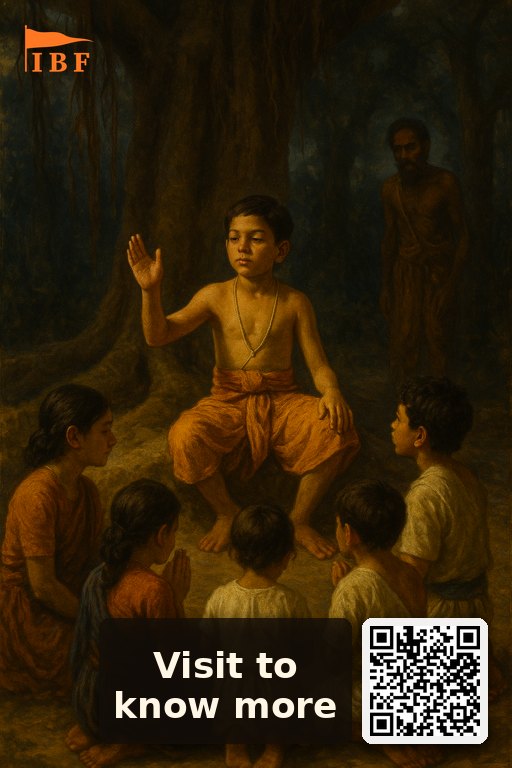
A boy of about ten was leading the other village children in a mock court — sitting on a tree-root as a throne, judging cases, dispensing imaginary verdicts. His name was Chandragupta. His birth is disputed by every source — perhaps Kshatriya, perhaps lower-caste, perhaps the abandoned son of a Mauryan tribal chief. The Brahmin texts and the Buddhist texts and the Jain texts cannot agree.
Chanakya watched him for an hour. He approached the boy and bought him from his foster-mother for a thousand panas. He took him back to Takshashila.
He educated him in everything. Vedic learning. Military strategy. Languages. Diplomacy. The Arthaśāstra as it was being written. The Brahmin made the king he would put on a throne.
The Fall of the Nandas
It took twelve years. There were failed assaults, retreats, alliances made and broken, levies raised in border tribes. Chanakya was Chandragupta's commander, his envoy, his food-taster, his political brain.
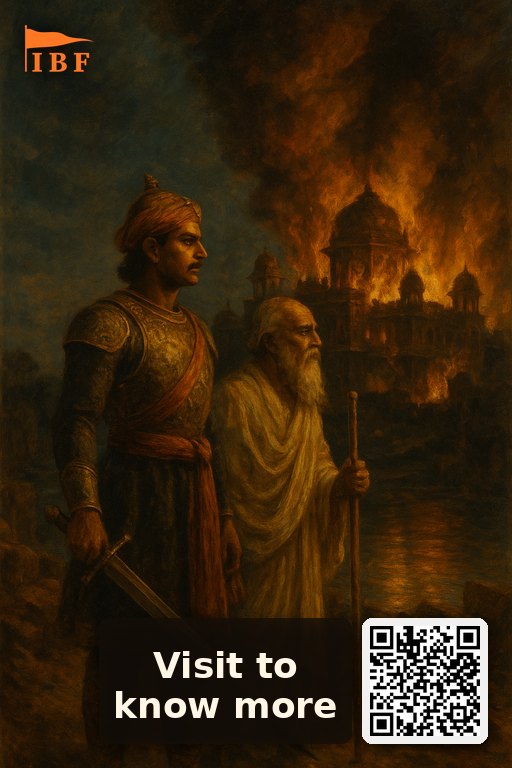
The Greek satraps fell first. Then the western kingdoms. Then the central Indian states. Finally Pataliputra itself.
Dhana Nanda was killed. The Nanda dynasty was extinguished — the queens, the princes, the generals, all of them. Chanakya had been precise about that. Uprooted from the earth.
Then, the chronicles say, he sat down in his quarters in the palace and retied his śikhā.
“The arrow shot by the archer may or may not kill one person. But the intelligence of a statesman, applied or withheld, kills or saves entire populations.”
The Arthashastra
The Arthaśāstra was finished. Fifteen books. Six thousand sūtras. A complete operating manual for the world's first administered super-state.
| Book | Subject |
|---|---|
| I-II | The king's duties · cabinet · spies |
| III-IV | Civil law · criminal investigation |
| V-VI | Secret operations · internal security |
| VII-X | Foreign policy · war · siegecraft |
| XI-XIII | Conquest · pacification of new territory |
| XIV-XV | Drugs, poisons, and the techniques of the Arthaśāstra itself |
It is the oldest known systematic treatise on the modern administrative state. Machiavelli's Prince — 1800 years later — covers a fraction of the same ground and is considered dark. The Arthaśāstra is more comprehensive, less cynical, and ruthlessly practical.
It was lost for a thousand years. A Brahmin pandit named R. Shamasastry rediscovered the only surviving manuscript in Mysore in 1905.
An Empire from Persia to Bengal
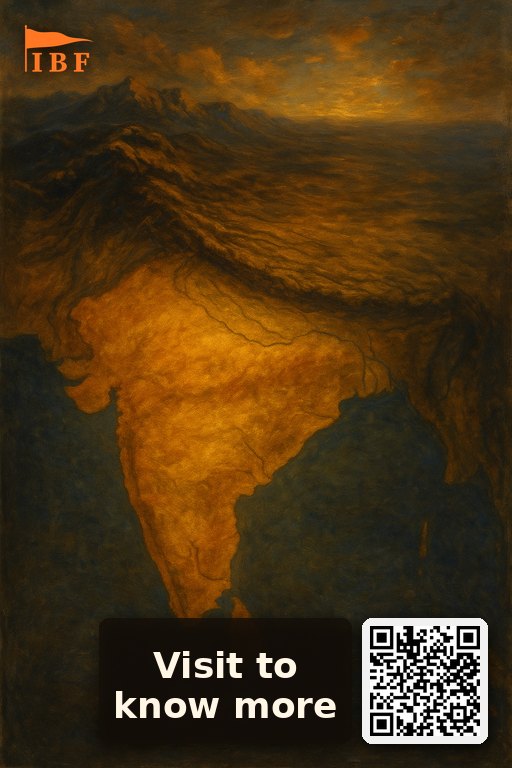
The empire Chanakya built ran from the Hindu Kush in the west to Bengal in the east. From Kashmir in the north to Mysore in the south. Five million square kilometres. Larger than any pre-modern Indian state.
Chandragupta abdicated after twenty-four years. He converted to Jainism and walked to a hill in modern Karnataka to fast to death — Sanyasana — under the guidance of the Jain monk Bhadrabahu.
His son Bindusara took the throne with Chanakya still as chief minister. His grandson was Aśoka, who would carry Buddhism across Asia.
None of this happens without the Brahmin from Takshashila.
The Disappearance
Chanakya's end is contested. One tradition says Bindusara's queen turned the new king against him, and the old Brahmin retired to a hut on the outskirts of the city, sat down, and starved himself to death in protest. Another says he simply returned to Takshashila and disappeared into anonymity.
What did not disappear was the Arthaśāstra and the order it described. Indian polity has never quite escaped him. Every modern Indian intelligence service, every Cabinet system, every diplomatic protocol — somewhere upstream of all of it is a Brahmin who would not let a king pull his śikhā for free.
Daṇḍa (the rod of state) protects everything else. Brahmin niti makes daṇḍa just. That sentence is two thousand three hundred years old. It still operates.
Carry the Story
The Brahmin Federation tells these stories so they are not lost. Share this one. Tell it forward.
A king grabbed a Brahmin scholar's topknot and threw him out of the palace. Twelve years later, the Brahmin came back with an army, exterminated the king's dynasty, and built the largest empire in Indian history. Chanakya. 375-283 BCE.
https://brahminfederation.org/legacies/chanakya
Insulted by King Dhana Nanda, the Brahmin scholar Chanakya vowed to uproot the entire Nanda dynasty. He found a boy named Chandragupta playing in a forest, educated him, and put him on the throne of an empire that ran from Persia to Bengal. He left behind the Arthashastra — the world's first complete operating manual for the modern state.
https://brahminfederation.org/legacies/chanakya
Chanakya — Brahmin from Takshashila, 4th century BCE. Insulted by a king. Built an empire to replace him. Wrote the Arthashastra, the first treatise on statecraft. The Brahmin who shaped India's political order.
https://brahminfederation.org/legacies/chanakya
Chanakya (Kautilya · Vishnugupta) — Brahmin teacher of Takshashila University. 375-283 BCE. Built the Mauryan Empire by mentoring Chandragupta. Wrote the Arthashastra: 15 books on statecraft, economics and intelligence. Rediscovered in 1905 by a Brahmin pandit in Mysore. #Chanakya #Kautilya #BrahminLegacy #IBF
https://brahminfederation.org/legacies/chanakya
In the 4th century BCE a Brahmin scholar from Takshashila University was thrown out of the Magadhan court. He went home, found a boy of disputed parentage playing in a forest, educated him to be a king, and over twelve years built him the largest empire India had ever seen. He left behind the Arthashastra — fifteen books on statecraft so practical it predates Machiavelli's Prince by 1800 years and covers ten times the ground. This is the kind of Brahmin contribution to the Indian political order the IBF exists to remember.
https://brahminfederation.org/legacies/chanakya
Or copy the link: https://brahminfederation.org/legacies/chanakya
Know a Brahmin legacy worth preserving?
The Federation is building this archive one story at a time. Send us a name, a tradition, a forgotten manuscript. If it deserves to be told, we'll tell it.